Crypto Mortgage
California Crypto Mortgage: Complete DFLA Guide for 2026
By Colin McMahon
May 14, 2026 • 7 min read
Table of contents
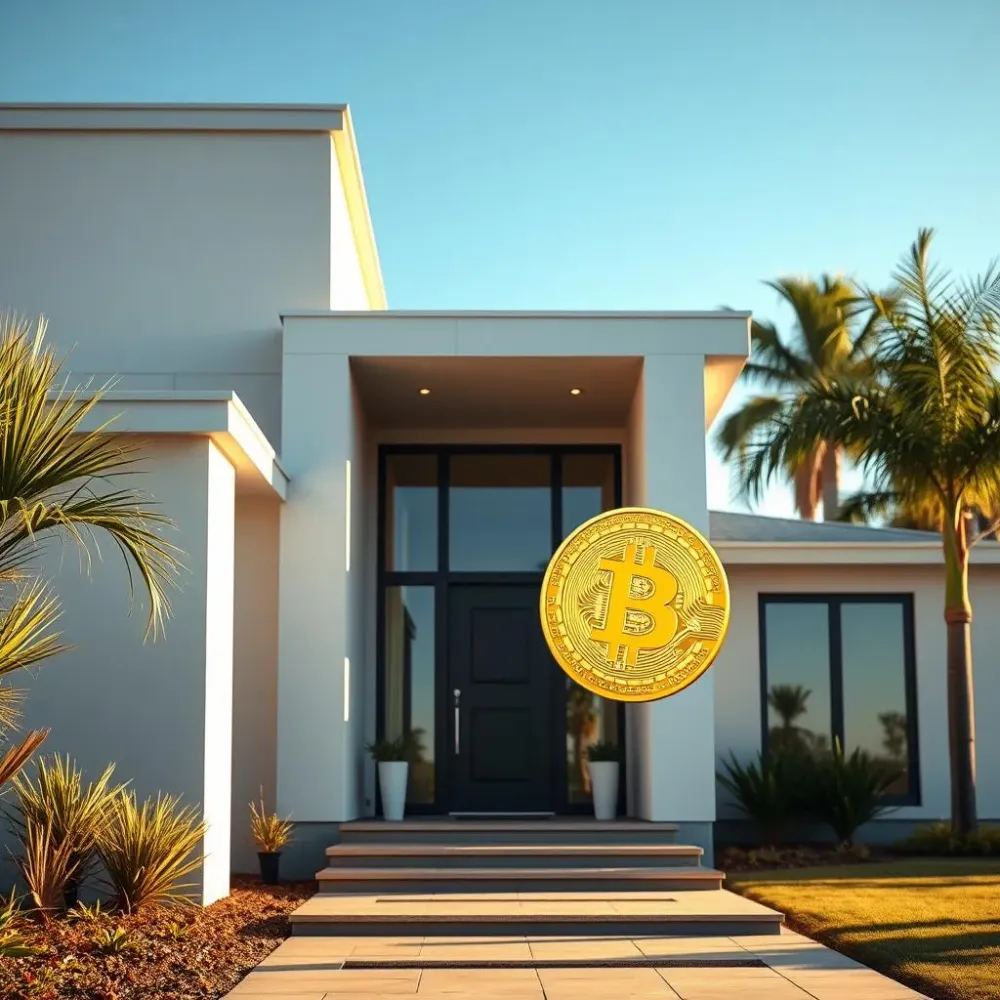
If you own Bitcoin and are planning to buy a home in California, you are about to have more legal clarity than ever before, along with a tighter set of requirements to check before you work with a lender.
California's Digital Financial Assets Law (DFAL) takes effect July 1, 2026. Every company that exchanges, transfers, stores, or issues digital financial assets on behalf of California residents must be licensed by the California Department of Financial Protection and Innovation (DFPI) by that date, or have a compliant application on file.
That is good news for borrowers. Licensing means accountability. It means lenders operating in California are operating under a regulated framework with consumer protections attached.
But it also raises real questions. What does the DFAL actually cover? Does it affect how you can use crypto to buy a home? Which lenders are compliant? And what should you verify before submitting an application for a crypto mortgage in California?
This guide breaks it down.
What Is the California Digital Financial Assets Law?
The Digital Financial Assets Law, commonly abbreviated DFAL, was signed by Governor Newsom in October 2023 as Assembly Bill 39 and Senate Bill 401. It creates a licensing and enforcement framework for companies that exchange, transfer, store, or issue digital financial assets on behalf of California residents.
The law is administered by the California DFPI, which began accepting license applications on March 9, 2026, through the Nationwide Multistate Licensing System (NMLS).
The effective date is July 1, 2026. After that date, any company conducting digital financial asset business activity involving California residents must hold a DFPI license or have a pending, compliant application on file. Unlicensed operators that miss this deadline face enforcement action and potential civil penalties.
A key detail worth noting: the law applies based on where the customers are located, not where the company is. A mortgage lender based in Miami or New York that accepts Bitcoin from California residents as collateral is covered by the DFAL.
What the DFAL Means for Crypto Mortgage Borrowers
If you are using Bitcoin as collateral for a home loan in California, the DFAL is directly relevant to who can legally hold and manage that collateral on your behalf.
When you take out a crypto-backed mortgage, your Bitcoin is held in custody by the lender or a designated custodian for the duration of the loan. That custody arrangement, including the transfer and ongoing storage of your digital assets, may fall under the scope of DFAL licensing requirements.
The practical implication: starting July 1, 2026, borrowers in California should confirm that any lender offering a crypto mortgage holds a DFPI license under the DFAL, or has submitted a compliant application before the deadline.
A DFAL-licensed lender must meet minimum requirements that include tangible net worth of at least $100,000, a surety bond of no less than $500,000, a documented anti-money laundering program, consumer protection policies, and third-party risk management procedures.
These requirements are not just procedural. They tell you the lender has been reviewed by a state regulator and can be held accountable under California law if something goes wrong. For borrowers pledging Bitcoin as collateral on a home purchase, that accountability layer matters.
Why This Matters More in California Than Anywhere Else
California has one of the highest barriers to homeownership in the country. The California Association of Realtors projects a median home price of $905,000 in 2026, a projected record for the state. A 20% down payment on a median-priced California home is more than $180,000.
That price pressure creates a real problem for crypto holders. Selling Bitcoin to fund a down payment triggers capital gains tax on any appreciation, and depending on your cost basis, that tax liability can be substantial. A Redfin survey found that 13% of millennial and Gen Z homebuyers have already sold crypto investments to fund a down payment, often without fully accounting for the tax cost involved.
A crypto mortgage changes that calculation. You keep your Bitcoin. You pledge it as collateral instead of selling. The home closes. Your Bitcoin position, and its future appreciation, stays intact.
The DFAL gives that transaction a formal legal framework in California, with a licensed regulator and defined consumer protections standing behind it.
Milo vs. Better/Coinbase: Understanding Your Options
Two meaningfully different types of crypto-backed home financing products are available in the market right now, and the distinction matters for California borrowers.
The Better/Coinbase conforming loan
In March 2026, Better Home and Finance partnered with Coinbase to offer mortgages where borrowers can pledge Bitcoin or USDC as collateral for a conforming loan. The crypto collateral funds the down payment portion of the purchase. The underlying mortgage is a standard conforming product.
To qualify, Bitcoin collateral must equal at least 250% of the down payment amount. USDC collateral must equal at least 125%. Traditional income documentation is still required. Loan amounts are also capped at conforming limits, which in most California counties is $1,149,825 for 2026.
This product works for W-2 borrowers who want to preserve their Bitcoin without selling it for a down payment.
Milo's crypto mortgage
Milo's crypto mortgage was built specifically for borrowers whose wealth is concentrated in digital assets. There is no separate down payment requirement. Bitcoin serves as full collateral for the loan, and underwriting is built around your crypto holdings rather than traditional income documentation.
This matters for international buyers, self-employed individuals, and investors who are asset-rich but lack the W-2 income profile that conforming products require. Milo has originated more than $100 million in crypto mortgages since 2022, including loans on properties up to $25 million in value.
For California borrowers, the key question is whether your income profile fits a conforming product or whether you need a lender built for non-traditional borrowers.
How to Verify Your Lender Before July 1
With the DFAL effective date six weeks away, here are the practical steps for California borrowers.
Search the NMLS. The Nationwide Multistate Licensing System is the public registry where licensed lenders list their state approvals. You can search any lender by name to check their California licensing status before you apply.
Ask the lender directly. Before submitting any application, ask whether the lender has applied for or received their DFPI license under the DFAL. A compliant lender will confirm this readily.
Understand the scope of coverage. The DFAL covers digital asset custody and transfer activities, not mortgage origination itself. Crypto mortgage lenders typically hold separate mortgage origination licenses. Both should be in place.
Confirm consumer protections are current. A DFAL-licensed company must maintain a surety bond and documented consumer protection policies. You can ask for written confirmation before you proceed.
Ready to Apply for a Crypto Mortgage in California?
Milo has been originating crypto mortgages since 2022. If you are planning a home purchase in California or anywhere in the US, we can walk you through the full process, explain exactly how we hold your collateral, and help you understand what the new regulatory environment means for your loan.
No W-2 required. No down payment required. Loans from $200,000 to $25 million.
Start your application at milo.io.
The opinions expressed in the Blog are for general informational purposes only and are not intended to provide specific advice or recommendations for any individual or on any specific security or investment product.
Author

Colin McMahon
Senior Manager, Loan Origination
Subscribe to our newsletter
Actual crypto success stories and strategies straight to your inbox.
Related articles
Learn
The crypto mortgage bill explained: what it solves and what it doesn’t
By Josip Rupena
July 23, 2025 • 8 min read
Crypto Mortgage
Cryptocurrency Mortgage: The 2026 Guide for US Homebuyers
By Colin McMahon
August 4, 2026 • 7 min read

Crypto Mortgage
How to buy a home with a crypto loan
By Colin McMahon
May 29, 2025 • 6 min read